From Cognitive Overload to Cognitive Offloading
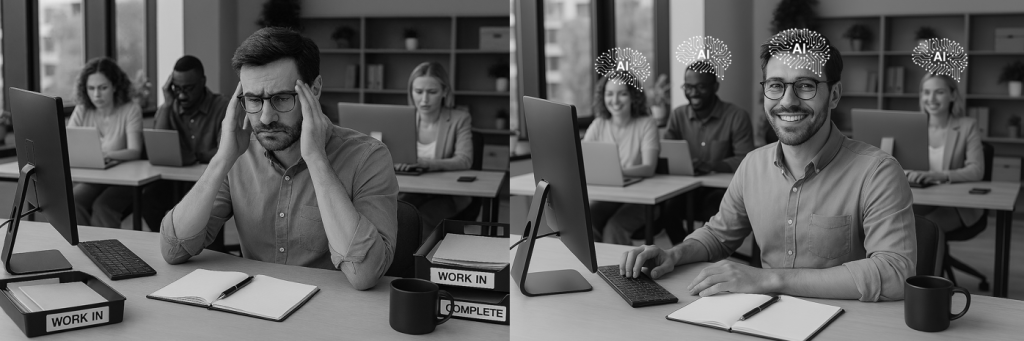
Just a few years ago, people managers and Organizational Development (OD) professionals began sounding the alarm about the toll of an always-on, fast-paced digital work environment. Employees were overwhelmed by back-to-back video calls, nonstop notifications, an overload of digital tools, and continuous cross-team collaboration.

The relentless context switching—paired with little time for mental recovery—led to mental fatigue, decision burnout, and a noticeable decline in innovation. This condition became widely recognised as cognitive overload.
In just a couple of years, the challenge has changed significantly. Many companies are now focusing on software rationalisation and simplifying tools to improve the employee experience. Combined with rapid advances and growing investment in Generative AI, we’ve entered the new age of deep human-computer partnership; an era that promises to transform productivity, unlock speed and reduce the cognitive burden on workers.
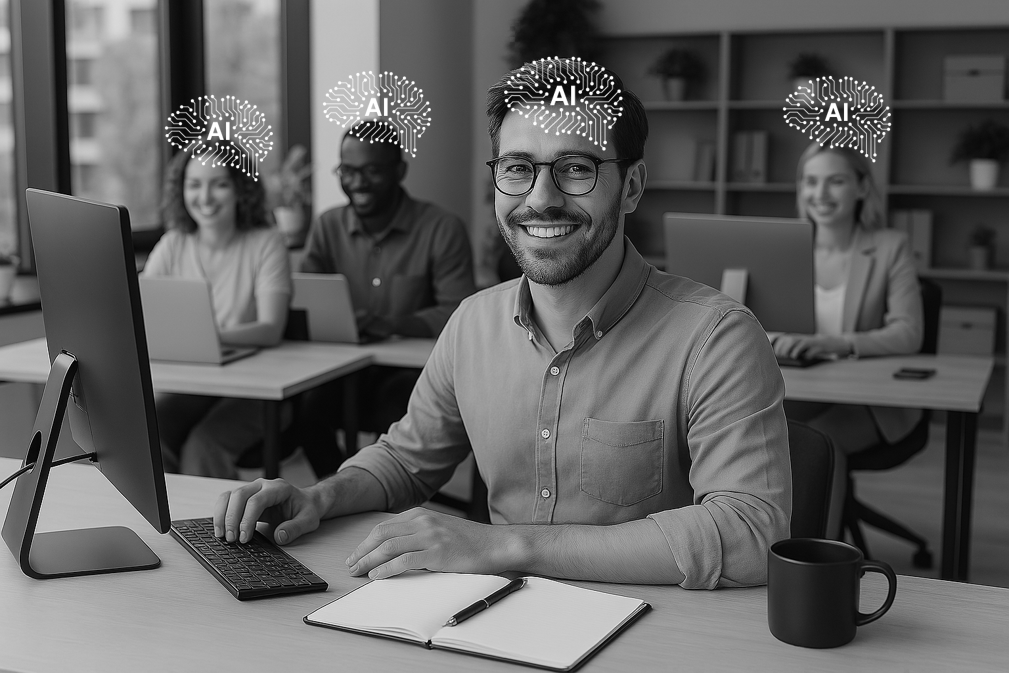
As Generative AI becomes more accurate and we grow more confident in its outputs, a new OD conversation is emerging: “Are employees becoming dependent on AI to do their thinking for them?“—a phenomenon known as cognitive offloading.
Like a muscle, critical thinking—our ability to objectively analyse information, evaluate evidence, and make sound, unbiased judgments—can weaken if not regularly exercised. While AI can be an excellent co-pilot, over-reliance on it may lead to shallow decision-making, a loss of creative tension, diminished independent judgment, and a higher risk of groupthink or misinformation. In recent years, mental overload was a major concern for employees; now, mental outsourcing is becoming a growing risk for employers.
Critical thinking isn’t just a ‘nice to have’—it underpins ethical decision-making, problem-solving in complex or uncertain situations, innovation, learning agility, and leadership potential. When teams stop questioning, challenging, or evaluating ideas independently, organisations lose their capacity for thoughtfulness, resilience, and originality. In today’s world—and even more so in the future—critical thinking is a vital survival skill for organisations.
With Generative AI becoming so pervasive, is all hope for critical thinking lost? Absolutely not! Like the major transformational turning points throughout human, societal, and economic history—such as the agricultural, scientific, industrial, and digital revolutions—this technological shift presents a new opportunity—to redirect our cognitive abilities toward more human and meaningful challenges, like climate change, global poverty, ethical decision-making, fostering empathy and social connection, to name just a few.
Even with Generative AI, our critical thinking doesn’t disappear—it shifts focus. Instead of just analysing answers, we’re now thinking more critically about crafting the right questions to increase the chances of receiving accurate, unbiased responses. In other words, our critical thinking moves upstream. AI doesn’t have to be a threat to thinking—it’s a mirror. It reflects back the quality of our prompts, our assumptions, and our willingness to question.
Things organisations can do to foster critical thinking in the workplace
🧠 Teach employees to ask better questions—not just get faster answers.
🧭 Don’t just reward outputs. Reward thinking. Create a culture where thinking is valued.
💬 “What do you think?” should always accompany “What did AI say?”
✨ Lean into the work that machines can’t (yet) replicate to human-level—empathy, storytelling, and sense-making authority.
💪🧠 Build “Cognitive Fitness” into Learning & Development e.g. real-world problem-solving labs, debates, simulations, or case study discussions.
🪞 Create space for reflective practices that build metacognition—awareness and understanding of your own thinking processes—essentially, “thinking about thinking“.
Final Thought
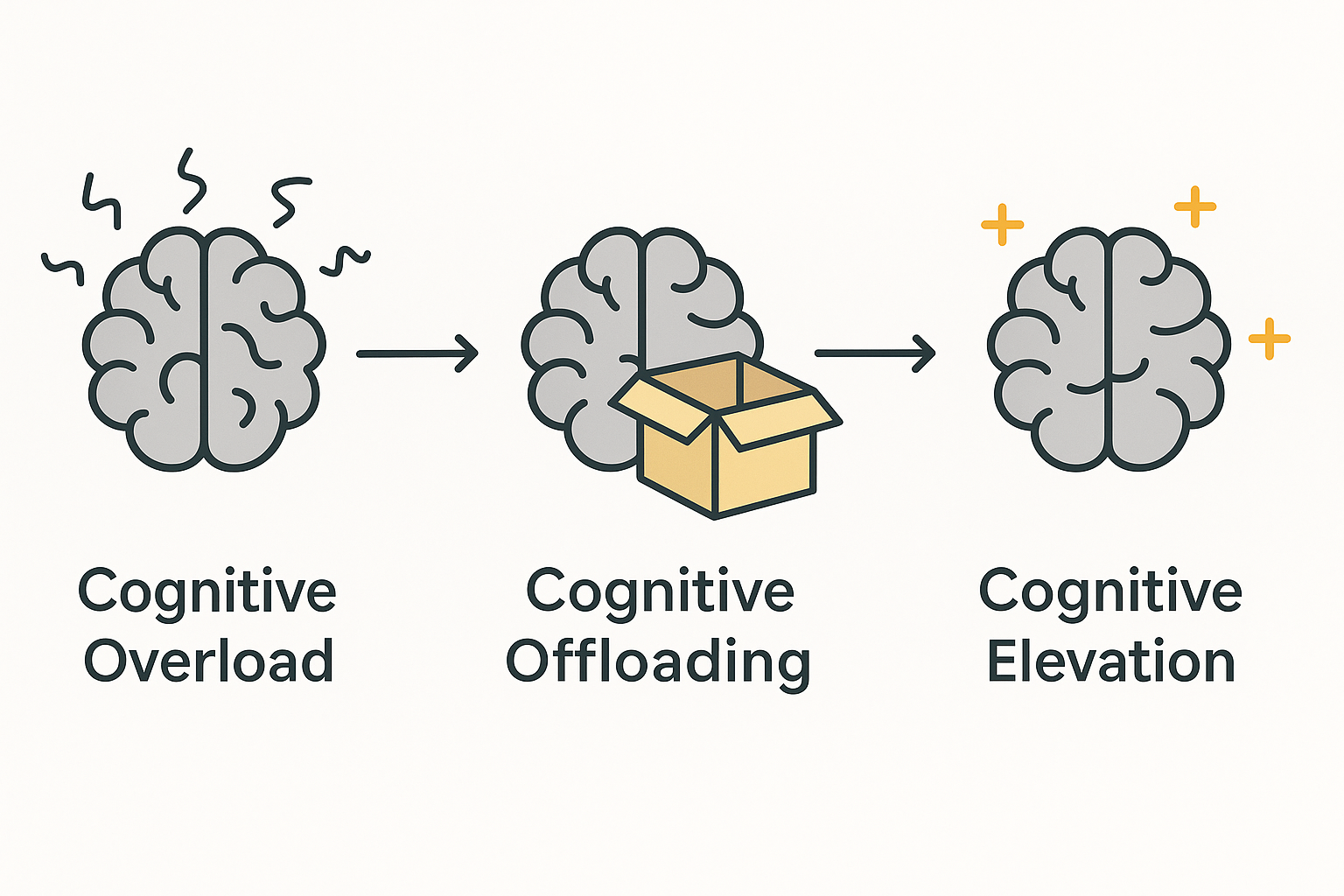
As managers, people leaders, OD professionals and employees, our role is to ensure that as tools become smarter, people keep thinking critically. The future won’t belong to those who simply use AI the most, but to those who use it most thoughtfully. Rather than focusing on cognitive offloading, let’s design for cognitive elevation—where human intelligence and AI complement each other, and mental sharpness is preserved and strengthened.
Images were created using Generative AI
 gillian bergin