
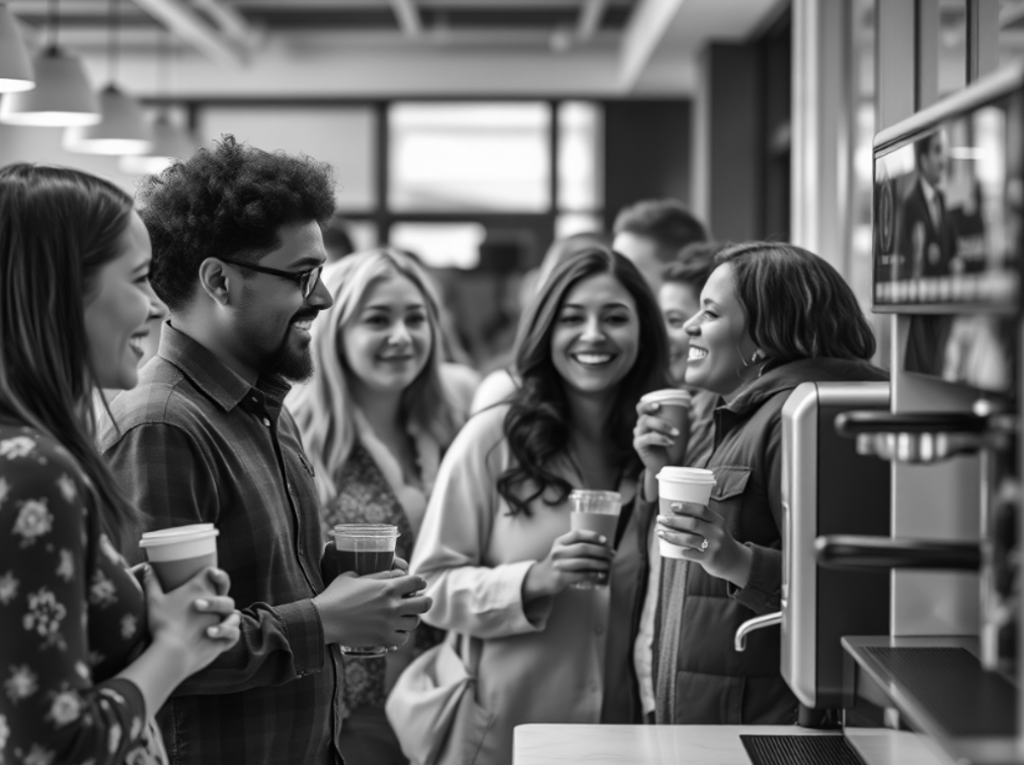
Why time in the office is more than just productivity or efficiency.
It’s probably safe to say most things have returned to our pre-Covid normal now; see how quickly we resumed old habits! That’s because, according to various studies, it can take anything from 18 to 254 days for a new routine to become a fully-fledged habit, the average being about 66 days. One of the discussions still playing out is the role of the office in the current state and future of work.
Many of these conversations centre around the practical’s of productivity and efficiency, which of course are very important in today’s commercial world, but I’d like to explore the biology and psychology of spending time in the office and the intangible benefits of shared physical spaces.
What happens when we come together in a physical space
When we meet others face-to-face, our brains release neurochemicals that promote social bonding, trust, and most-importantly, well-being. The two biggest players in this process are Dopamine and Serotonin. These are essential hormones and neurotransmitters, meaning they send signals from one place in the body to another.
Dopamine – also known as the “motivation hormone” is part of our bodies reward and feel-good system. It plays a key role in motivation and our sense of achievement and impacts our body functions like sleep, movement, mood regulation, ability to learn and more. When we don’t have enough Dopamine, we can feel unmotivated, have reduced interest in things, procrastinate more often, feel tired and find it hard to focus. When our levels of dopamine are good, we are more likely to feel stable, motivated, alert and focused.
Serotonin – also known as the “happy hormone” is part of our bodies feeling and behavioural system. How we feel has important implications on how we act, our behaviours. If our serotonin levels are low, we can experience more intolerance or resistance. If they are good, we are more likely to feel happy, content, satisfied and less impulsive.
Social interaction is an important contributor to both of these chemicals. But not just any social interaction, these are provided through positive social interactions, like warm greetings from colleagues, fun brainstorming sessions, lunch with friends (even when it’s in the canteen!), sharing a laugh at the printer, feeling a sense of inclusion and belonging in meetings.
These chemical responses can be difficult to replicate in a remote work situation, because virtual connection can lack the spontaneity and depth of physical presence. It’s important to state that the flexibility provided by remote work, eating better, more exercise and exposure to natural sunlight also contribute to our levels of Dopamine and Serotonin.
So what is the right balance of remote work and time in the office? Well, that’s the million dollar question, isn’t it? We will have to wait and see how it plays out globally, but I’m a big believer in balance, change and social connection, so I always lean into the Hovis bread Best of Both concept. These decisions are rarely binary but a combination of the best ingredients.
Conclusion
During the COVID-19 restrictions, we learned a lot about the short and long term impacts of social isolation. We felt it and we didn’t like it. While the forced slow-down and simplification of daily life was welcomed for a week or two, we quickly remembered that we are social beings after all, with an unquenchable need for connection. As companies navigate their current and future business models, and employees explore the workstyle that works best for them, many employees are experiencing a renewed appreciation for the office’s role in fostering connection and personal wellbeing. We know better now the biological benefits of physical proximity, so great workplace design should prioritize human connection, collaboration and serendipitous interaction. This way, time in the office can tap into our brain’s natural reward systems, harnessing the power of productivity and chemistry.
If you haven’t spent any time in the office lately, why not re-explore the magic that happens when people come together.
 gillian bergin